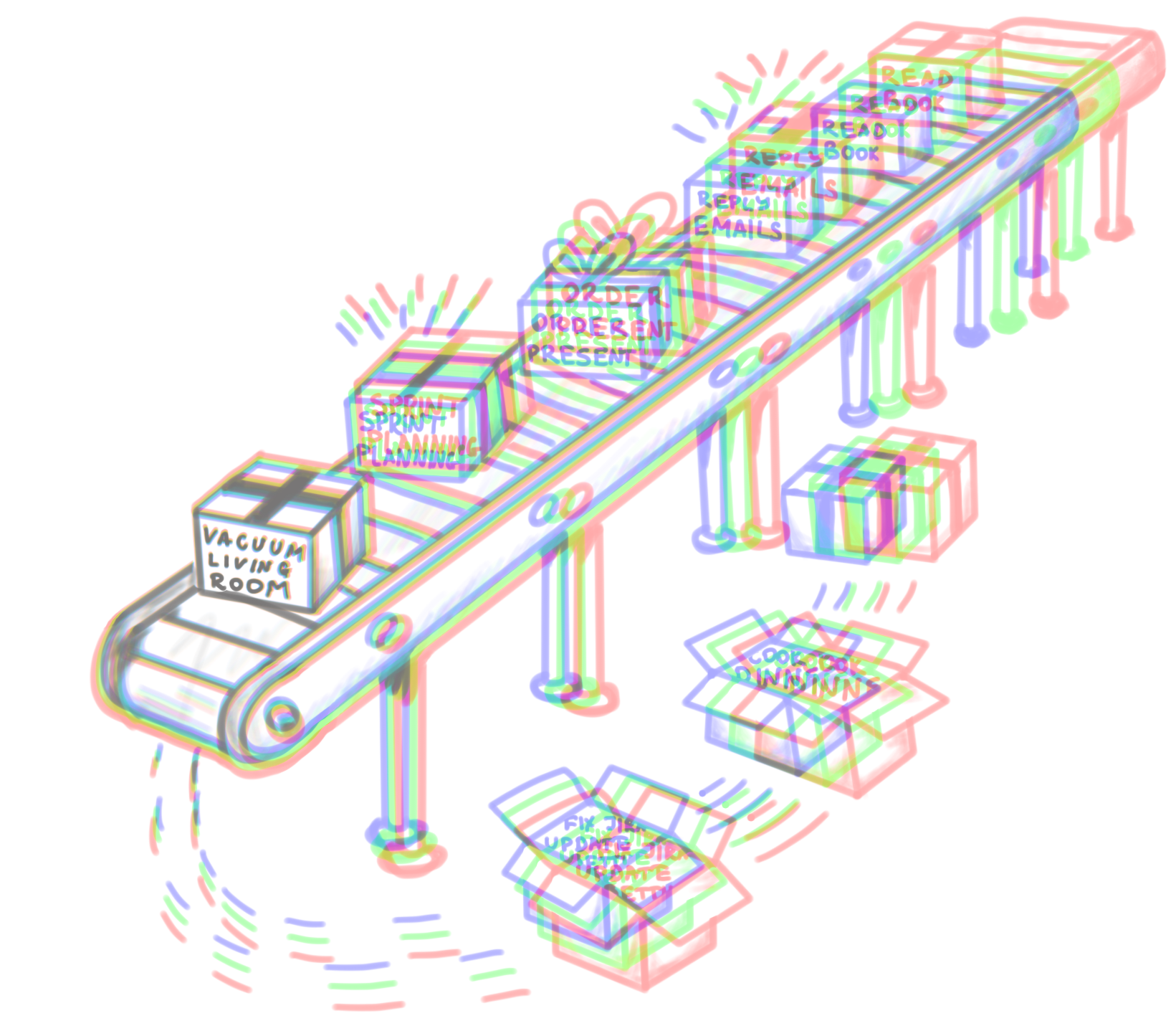
I recently attempted to write a blog post exploring how our human memory is limited and how easily things slip between the cracks when life gets overwhelming.
The original draft was around 2,300 words – painstakingly researched, peppered with references to scientific studies, and teetering into “academic essay” territory. It ended up so dense and dry that it felt more like a term paper than a friendly blog post.
So, after wrestling with it for a week, I did the unthinkable: trashed all of it and decided to start fresh!
Humans vs. computers: the missing orchestrator
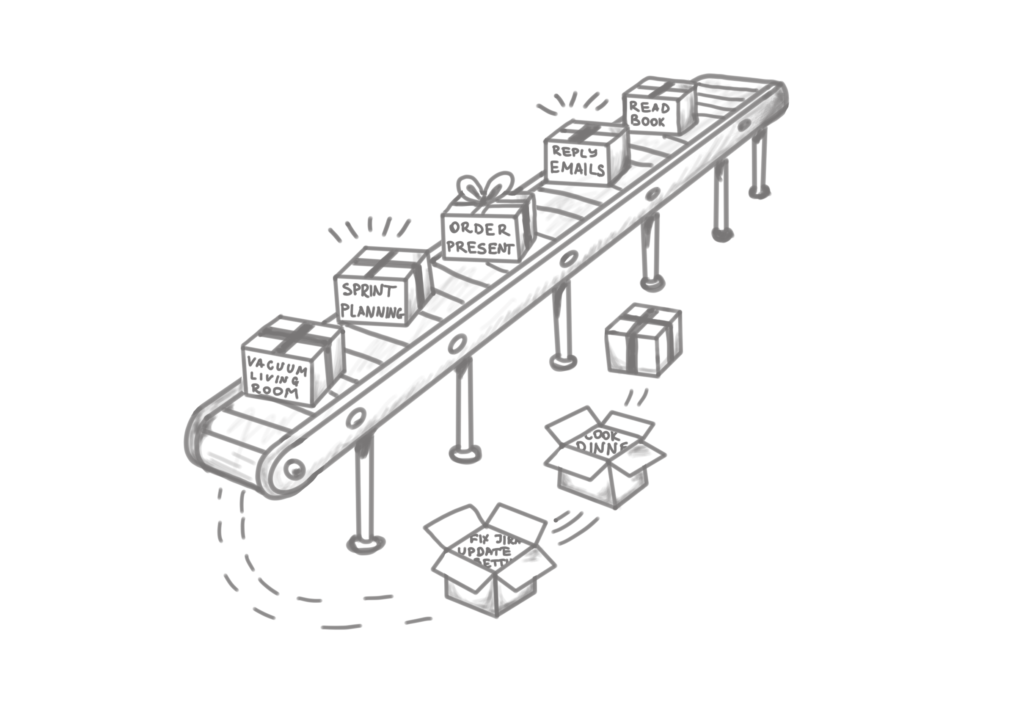
Computers can juggle an incredible number of tasks, but they do so under the guidance of an orchestrator – essentially, the person controlling the keyboard and mouse.
That human operator decides what the computer should work on and in what order, making sure that once one task is done, another is queued up.
The computer itself won’t spontaneously “forget” its tasks because it’s programmed to follow instructions faithfully, step by step. There’s a clear system in place to ensure nothing falls through the cracks.
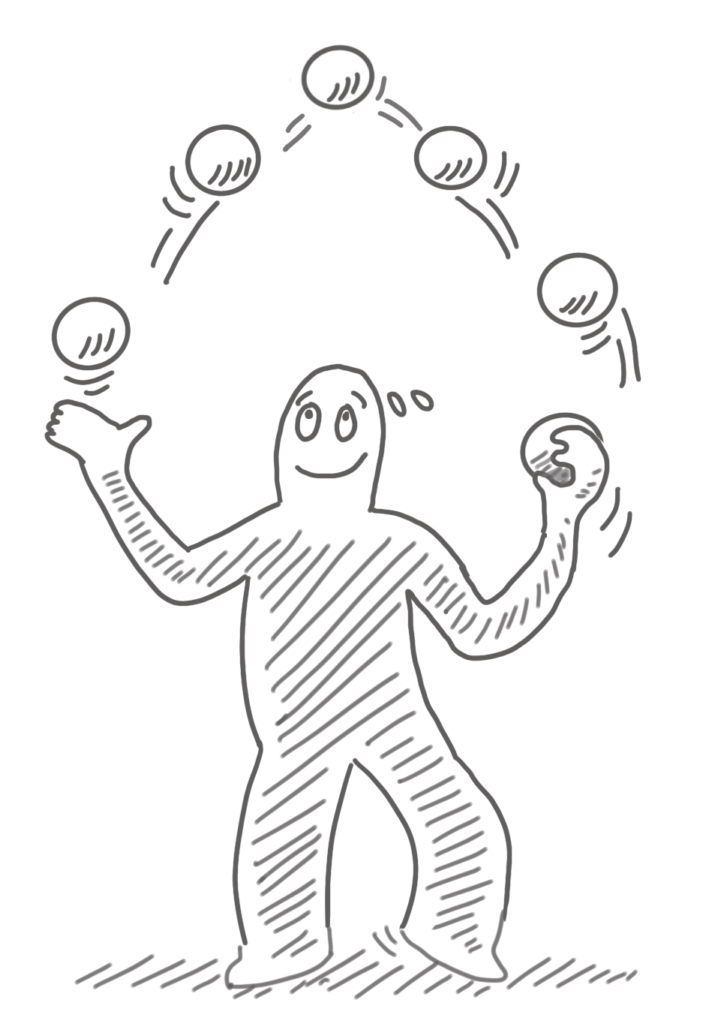
In contrast, for us humans, there’s no built-in system that automatically keeps track of everything we need to do. Our brains are magnificent in many ways, but they can also be distractible, forgetful, and prone to overload, especially when we’re juggling work demands, family and social life, new hobbies, and flashes of inspiration that strike in the shower.
Whenever we exceed our mental bandwidth (and research suggests that most of us can only comfortably hold around seven items in our working memory), tasks will inevitably start to slip.
Why things fall through the cracks
It’s not just about short-term or long-term memory. It’s about the absent “orchestrator” within our minds – the part that consistently, reliably tracks all projects and tasks to completion.
Since our brains don’t come with that built-in project manager, we either need to
(1) train ourselves to be highly disciplined about tracking tasks, or
(2) rely on external tools to do it for us.

This reality becomes painfully clear when the tasks keep piling up: errands, emails, side projects, birthdays, ideas for the future, you name it. Without a method, whether it’s a to-do list, an app, a planner, or some bullet journal system, bits of information and important tasks slip away.
Because, unlike a computer, we don’t have a strict, unerring sequence to follow. Our minds roam, get bored, get excited, get distracted, and just plain forget.
Restoring the Orchestrator
So, how do we “install” our own orchestrator? It can be as simple as pen and paper, or as sophisticated as project management software.
For me, it’s those 5 boxes next to the to-do items list on every page of my Hobonichi Cousin planner. A page a day works like a charm (so far). A few years earlier I was using a todo-list app quite a lot.
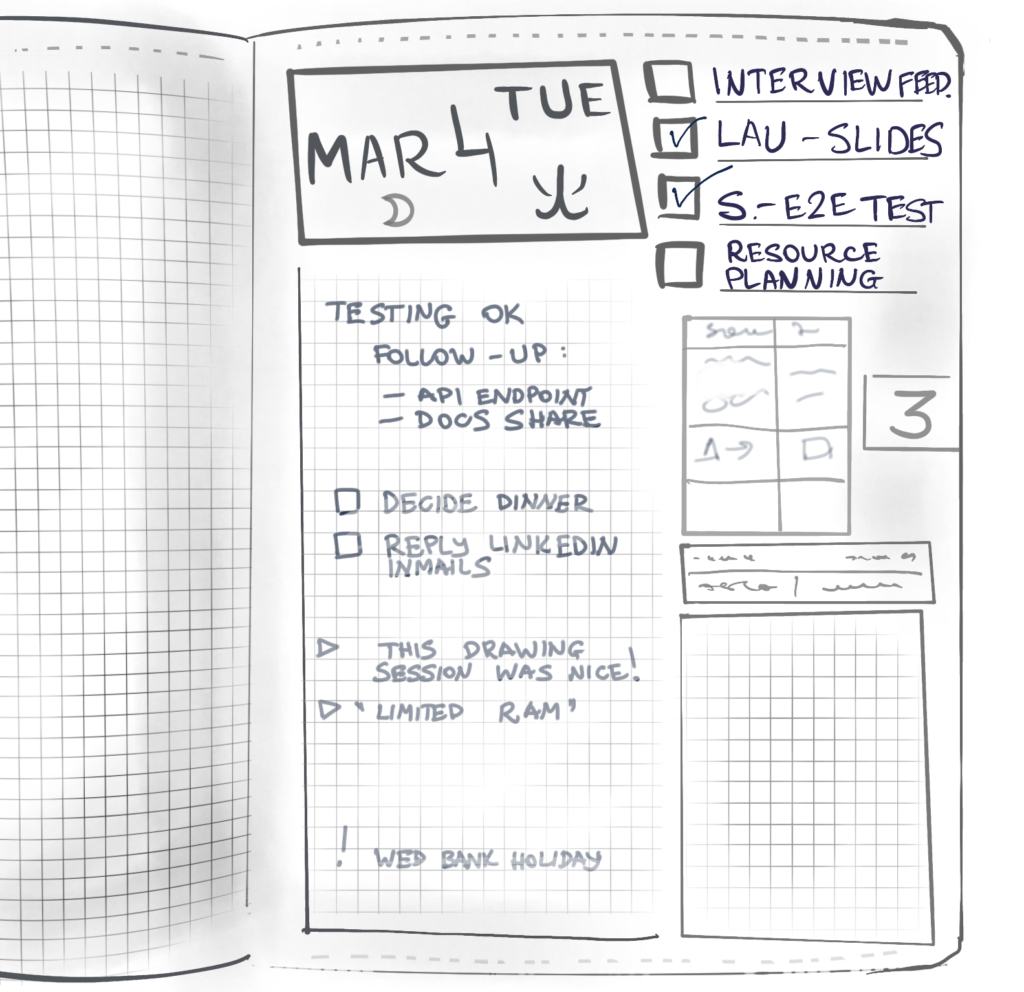
By offloading what we need to remember onto a reliable and simple system, we free our brains from the burden of constant mental juggling. This gives us the mental space to actually make progress.
As a bonus, having somewhere to record these things ensures that tasks, ideas, and deadlines, has somewhere to land instead of floating off into oblivion.
Our finite “RAM“
If we don’t acknowledge the limitations of our memory, we risk constant frustration, missed opportunities, and the mental strain that comes from trying to keep everything in our heads. It may feel like you’re overloaded with everything, having such a big pile of work that you don’t even know where to begin.
A computer’s “orchestrator” is external (the user), but for us humans, we have to become our own orchestrator – or else deliberately create a system that acts as one. Recognizing our finite “mental RAM” and compensating for it is one of the best things we can do to stay organized, efficient, and sane.
That’s the message I wanted to share. Sure, I could have cited the peer-reviewed studies and pages of research, but I realized that might bury the straightforward truth:
Our memory isn’t perfect – and if we don’t build a structure around it, we’re bound to let things slide.
Sometimes, a simpler message speaks louder than a mountain of words.
Note: While research on working memory capacity often points to around seven “chunks” of information, this can vary from person to person and situation to situation. If you’re curious about the science, feel free to dive into some of the foundational studies by psychologists like Shireen Stephen.
But for day-to-day practicality, the main takeaway is that our memory is nowhere near limitless. Protect it, bolster it, and give it the help it needs.